Inferred Mind
Product design
An AI tool for political campaigns. I joined at MVP and worked on the layer between raw media data and the copy a campaign actually publishes.
Context
Campaigns move on the news cycle. A story breaks in the morning and the response has to be out before it turns.
The product tracked all of it: headlines, TikToks, tweets, the accounts a campaign chose to watch. The ambition was to turn that chaos into something structured. But the early versions were cluttered, and structure alone didn't tell anyone what to do next.
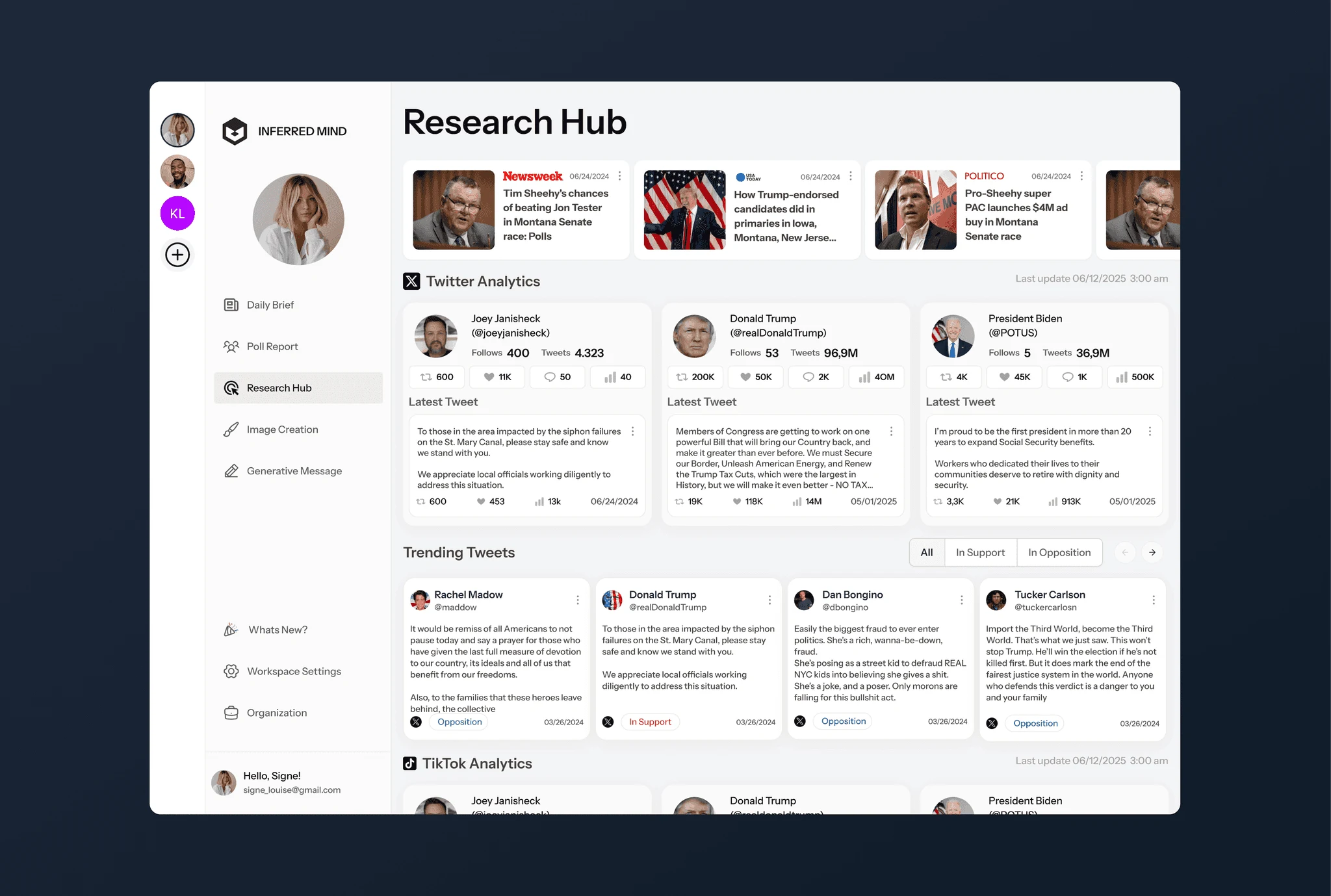
Research Hub
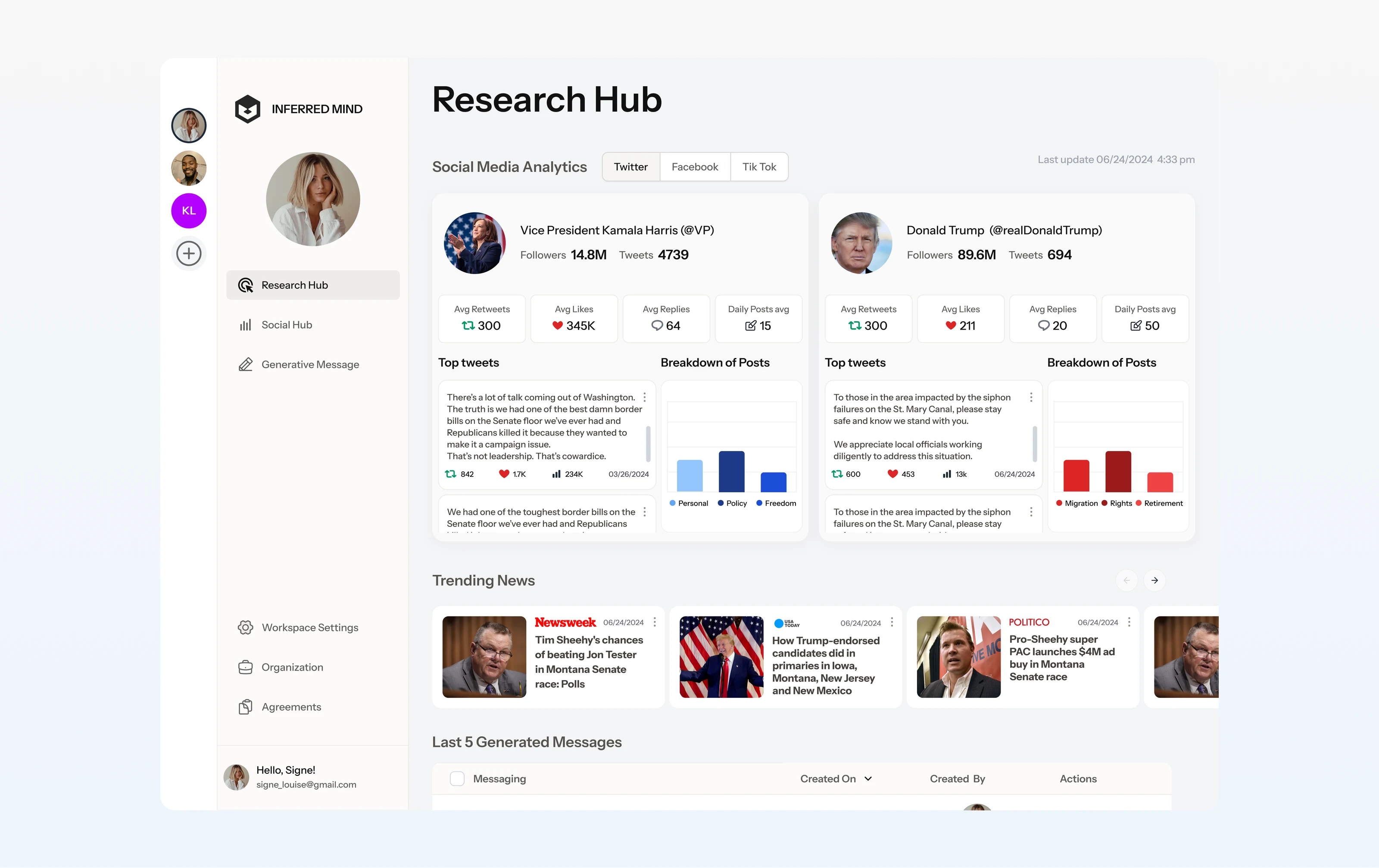
The Hub was the foundation, and the part I inherited rather than designed. I worked through iterations until it became the control center: one place to see what had happened across media that day.
It also exposed the real problem. Seeing everything is not the same as knowing where to start.
Daily Brief
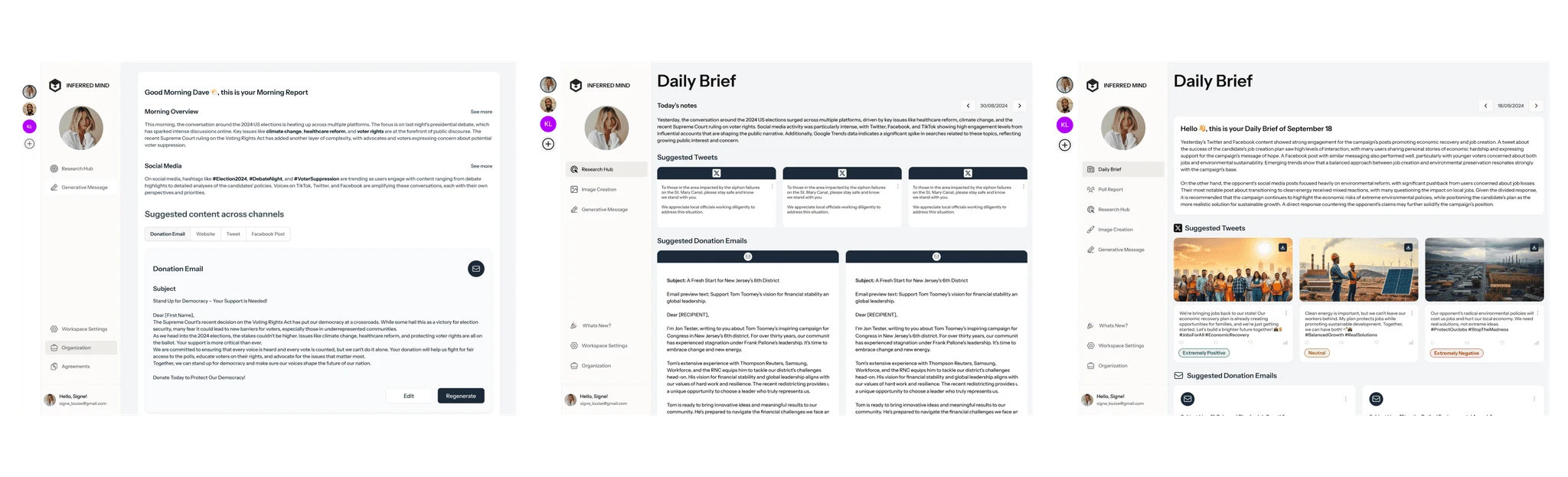
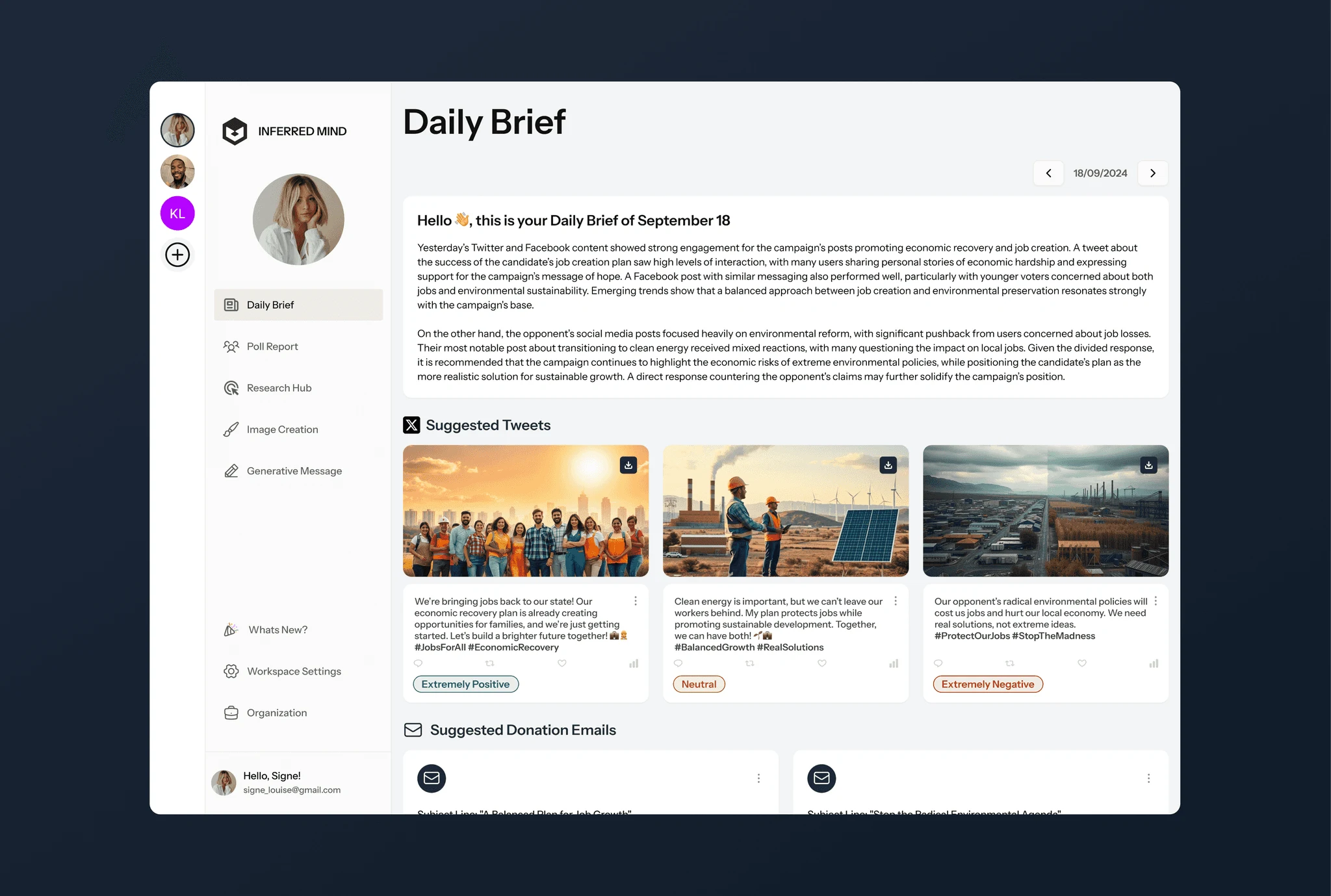
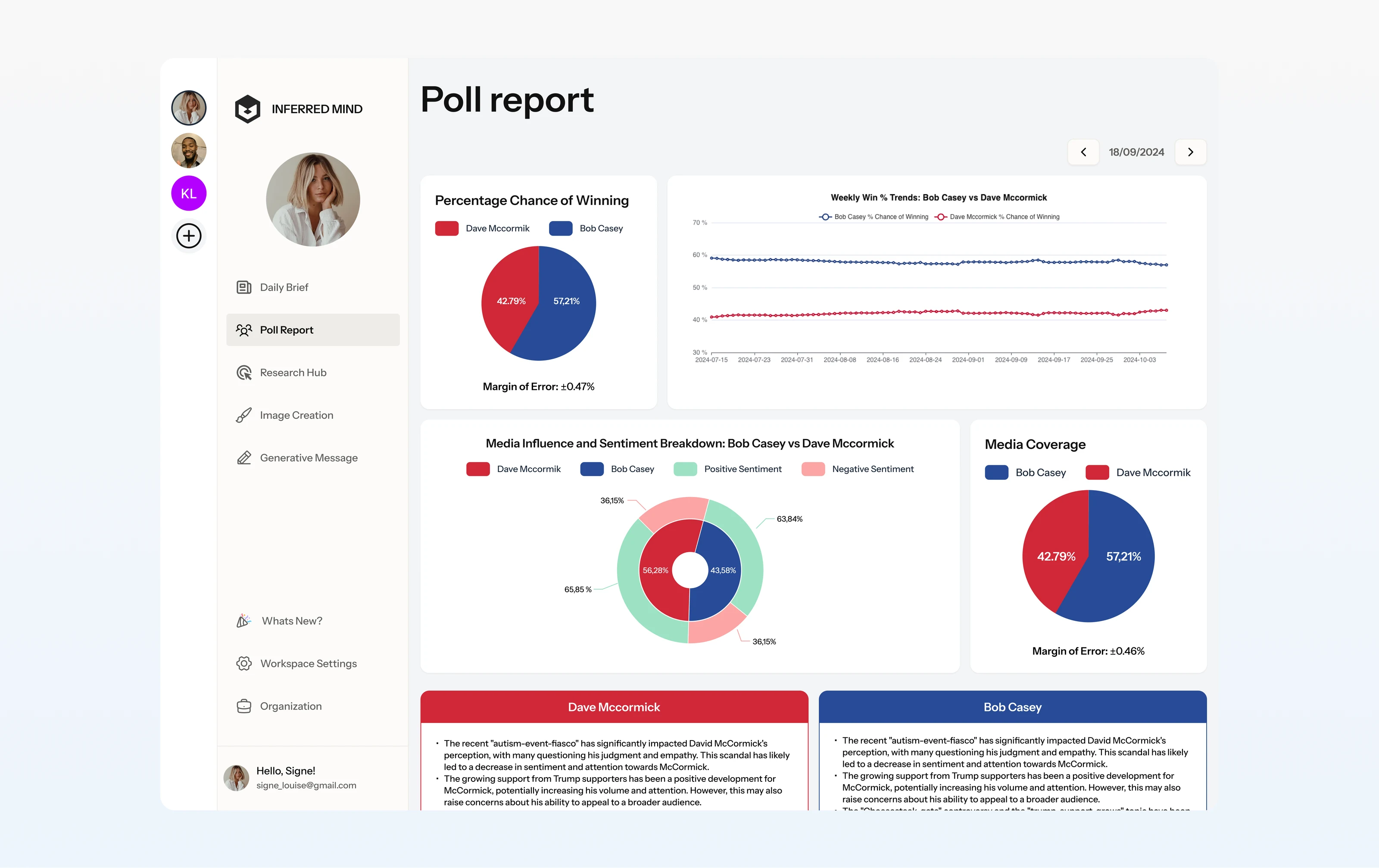
So the next layer condensed a day of political events into something scannable. Key topics, sentiment trends, and openings to react to.
The final version goes further and delivers ready-to-use copy off the previous day's topics, with sentiment variants from extremely positive through neutral to negative. Teams stopped opening a blank page and started editing a position.
Generator
Campaign teams don't struggle for ideas. They struggle to start.
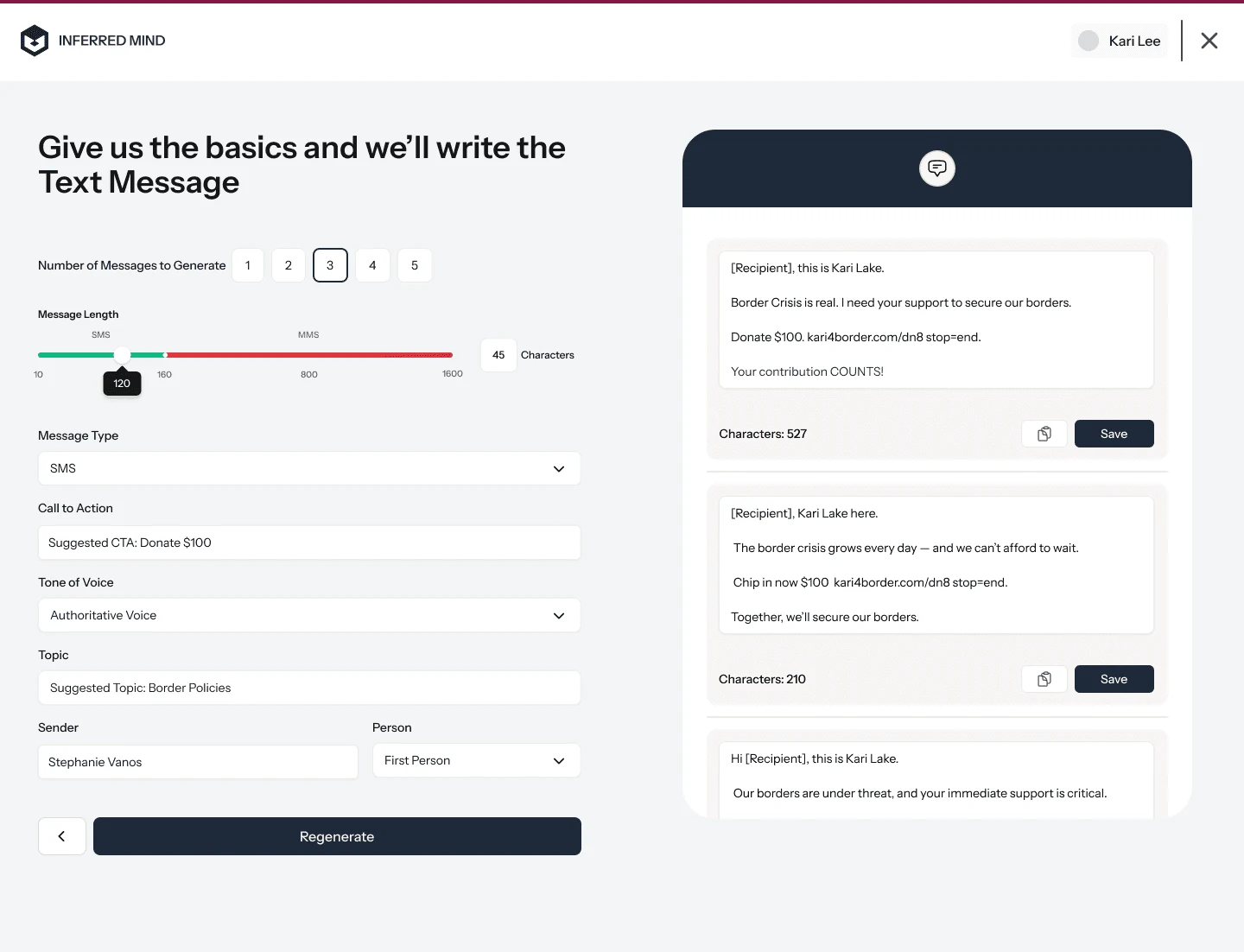
The original generator asked for long free-text fields, manual entry for topic, tone, and CTA, and returned one draft at a time. One user put it plainly: it feels heavy to get started.
We mapped the flow and scored the effort of every interaction. Writing a long field cost 8. A click or toggle cost 1. The design leaned almost entirely on the 8s.
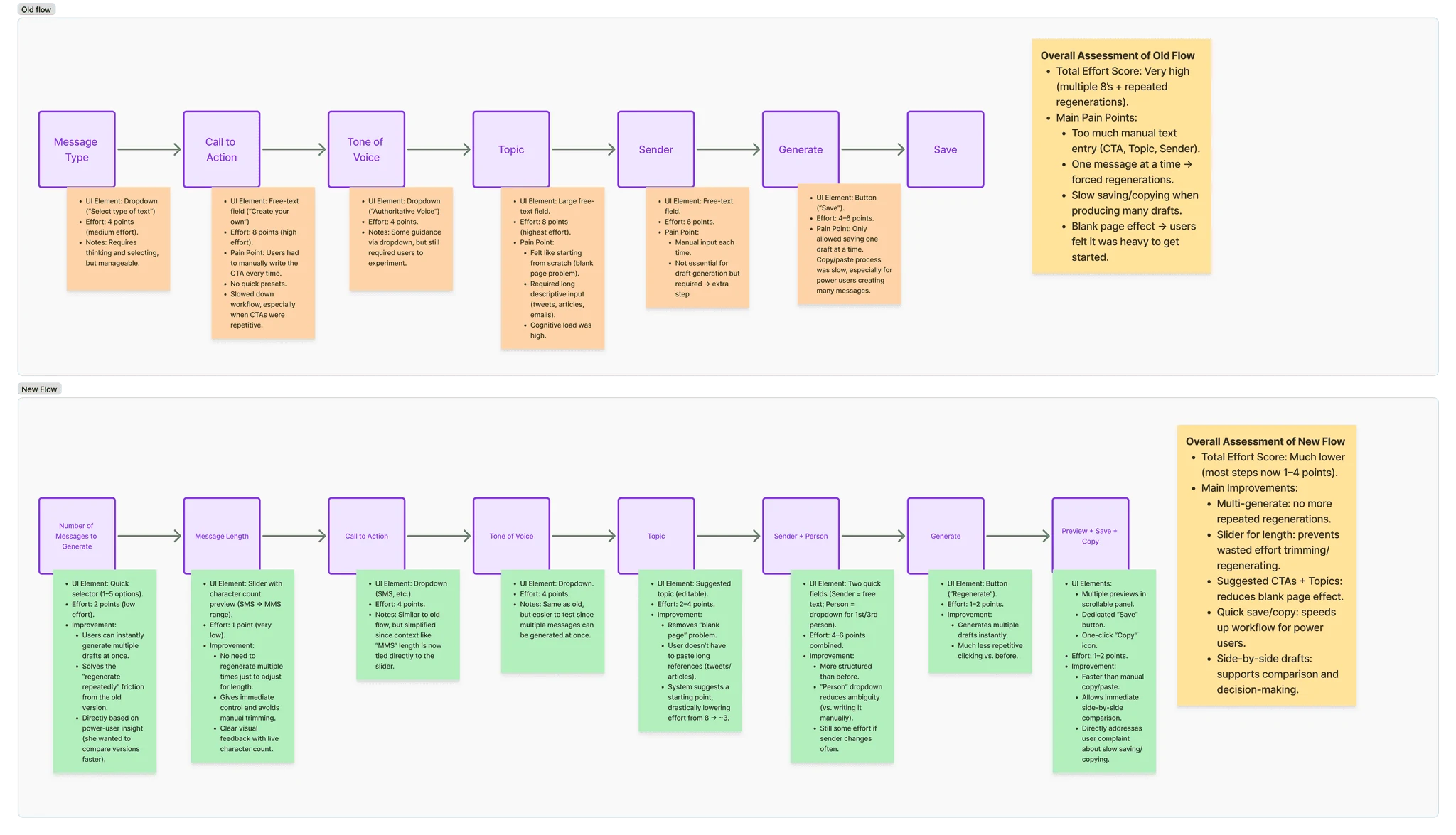
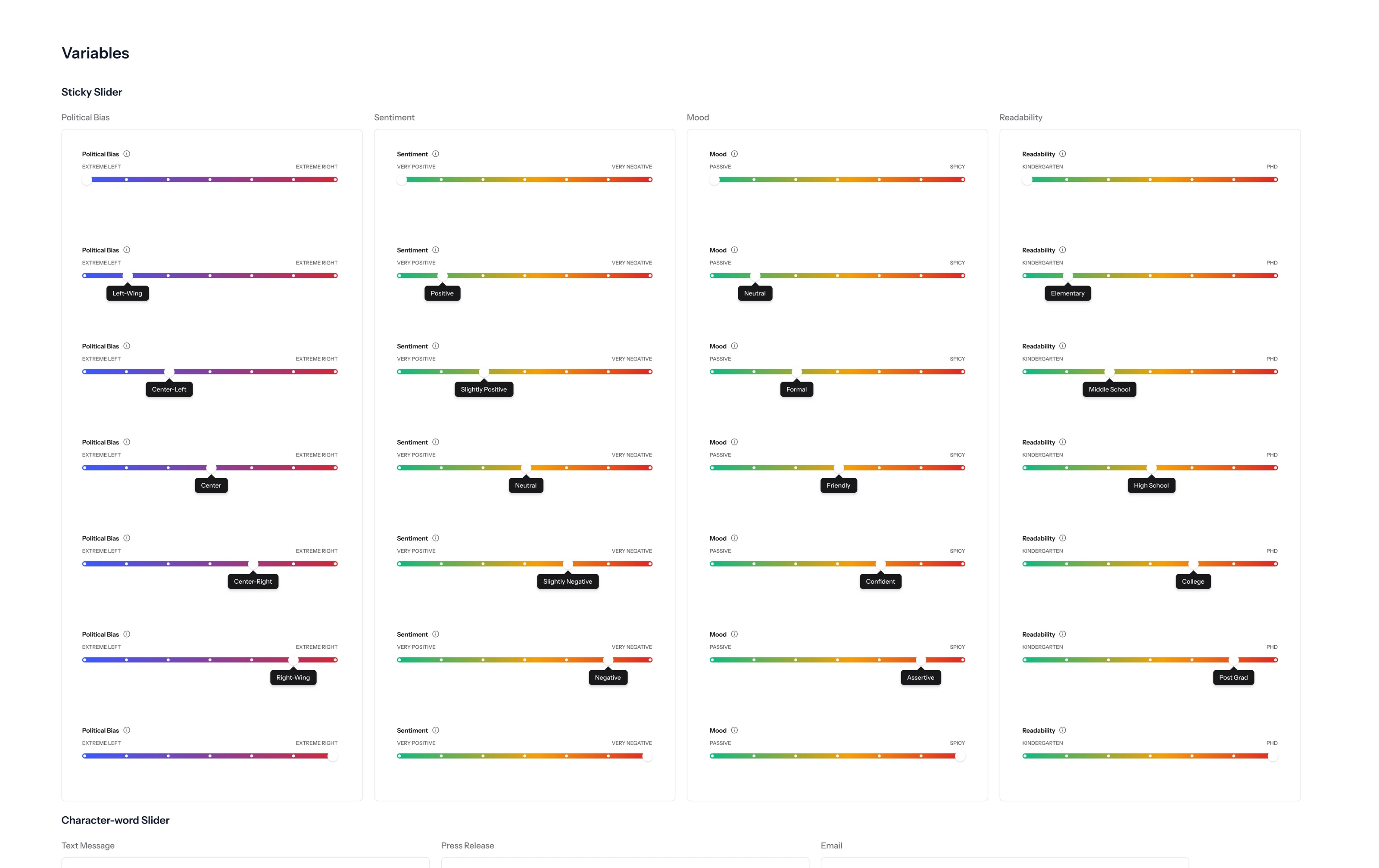
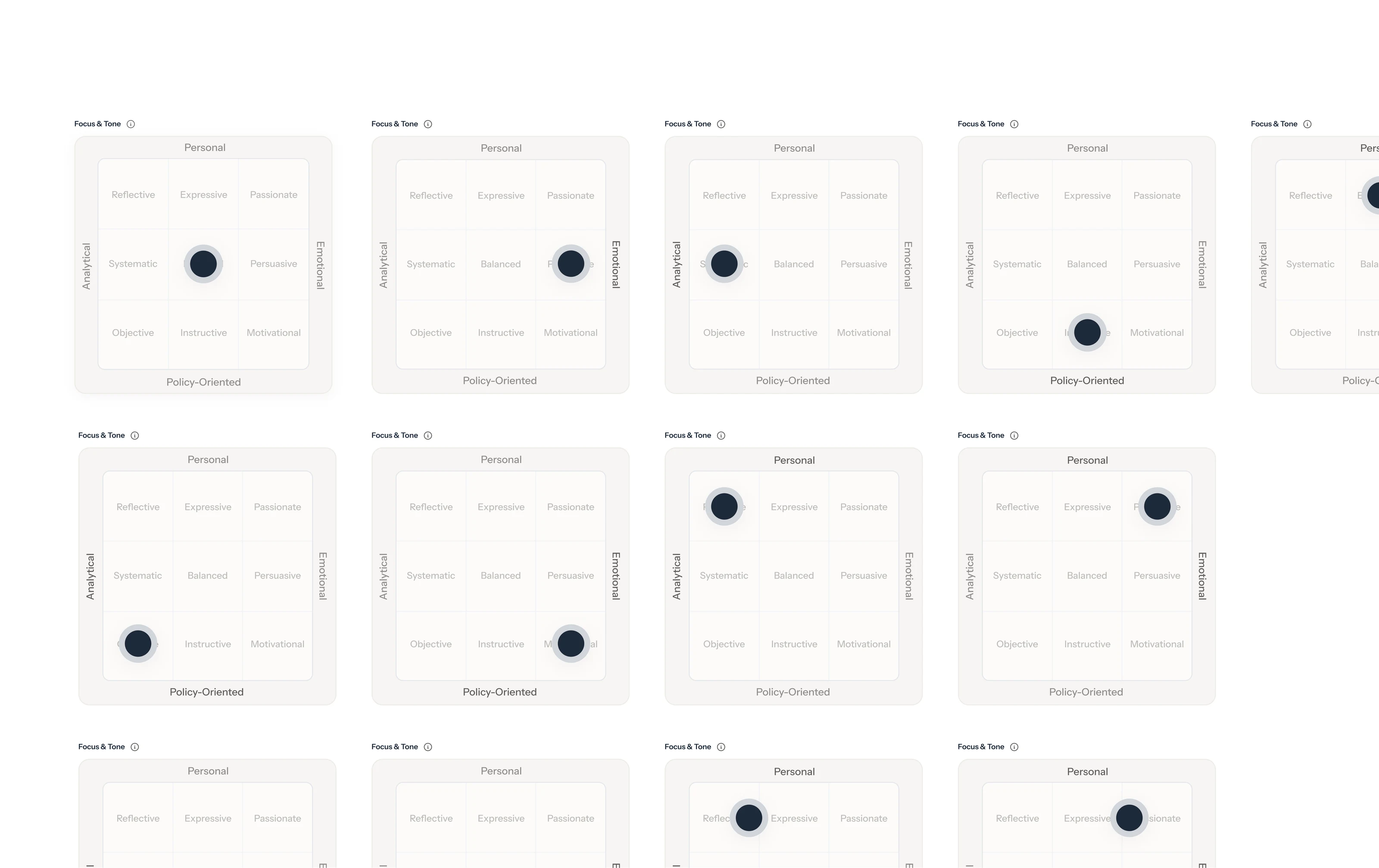
The redesign traded high-effort inputs for low-effort controls without losing precision. A length slider with live character count instead of rewriting. One to five drafts at once. Suggested topics and CTAs, still editable. Quick selectors for tone, sender, and perspective. Save and copy in a single click.
Outcome
In guided usability sessions, teams reported lower friction and faster drafts. Several said the output was publishable without edits.
The shift that mattered was in how people talked about the task. It went from having to write this to seeing what I can spin up.
The interface was never the hard part. The hard part was designing for someone with forty minutes to respond to a story that is already moving.
My contribution was design. I worked on product structure, UX, UI, and iteration alongside developers and campaign experts.